After sending my first audio demo, I realised that the sound was not only functioning as support for the animation. The group’s final animation seemed to develop around the pacing, atmosphere and emotional rhythm of my audio. This changed how I understood my role in the collaboration.
At first, I expected to create sound in response to finished visuals. However, because the animation was still developing, my audio became a reference point for the group. The sound helped establish a sense of timing, movement and emotional progression before the final animation was complete. This made the collaboration feel more open and less like a traditional post-production process.
The audio structure included ocean textures, pearl-like details, atmospheric layers and a later sense of tension. These elements gave the animation a temporal framework. Instead of simply matching sound to image, the image began to respond to the sound. This was important for me because it showed that sound can shape moving image structure, not only decorate it.
This process helped me understand sound as a compositional framework. In this project, sound did not only create mood; it also helped organise pacing and atmosphere. This connects strongly to my own practice, because I am interested in sound as a material that can shape time, space and perception.
This was one of the most important realisations in the collaboration. I was not just providing sound effects or background music. My audio contributed to how the projection animation moved and developed. It helped me see my role as a sound artist in a more structural and collaborative way.
The Animation
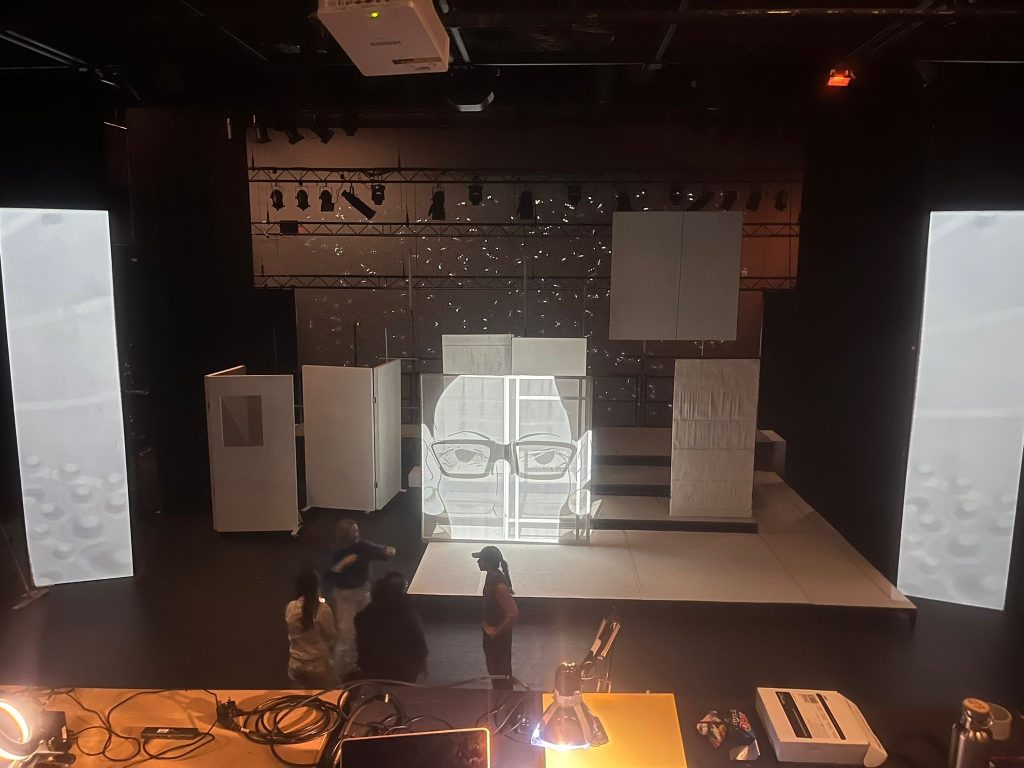
The rehearsal at csm
The rehearsal video
Leave a Reply